When I joined SDO (Sharjah Digital Office, now Sharjah Digital Department) in 2020, I entered a phase where our product was in the nascent stages of its inaugural launch. At that time, the design and engineering team comprised a mix of freelancers, third-party agencies, and both remote and onsite members. The lack of cohesion and alignment across the team had significant challenges. Also the design landscape was chaotic, lacking a clear direction, consistent visual styles, and well-defined design patterns. Nearly every project was improvised, and the lack of structure was evident. It was time that we bring all the teams together and build in-house design team progressively.
I started by establishing the design recruitment process, Implementing a new onboarding process for new hires specifically designed for designers but other teams had taken good usage of it as well. I also established the design team weekly activities, enhanced processes and design review guidelines.
During the first month, I started the recruitment process. Attracting top talent is one aspect, yet, given the nature of the governmental organisation and the predominantly Arabic-speaking audience for our product, recruiting some of the designers fluent in Arabic posed an additional challenge. For every designer brought on board, there were hundreds who did not make the cut. I carefully selected designers that were inspiring, motivated and had good design sense. Additionally, I expanded the team by including an illustrator in the design team.
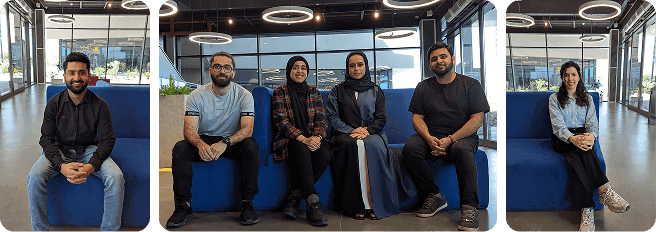
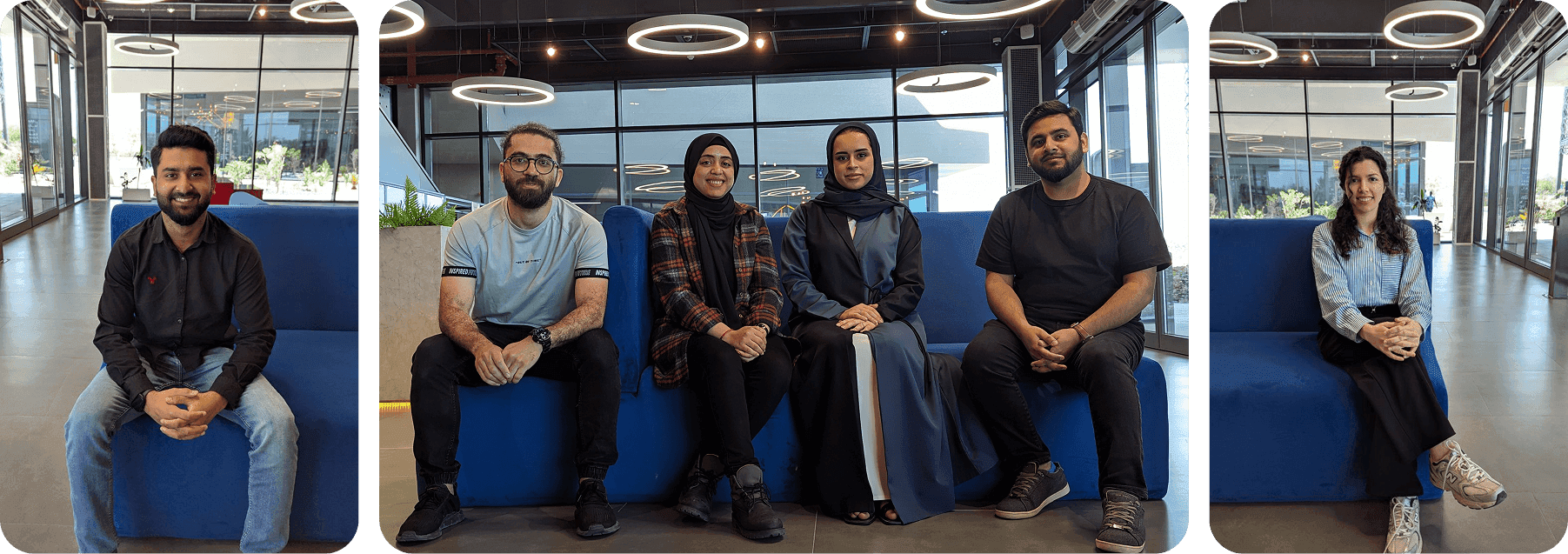
Design team at work
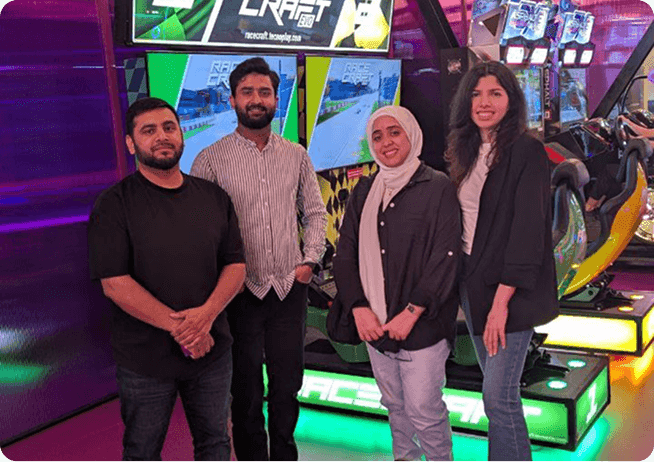
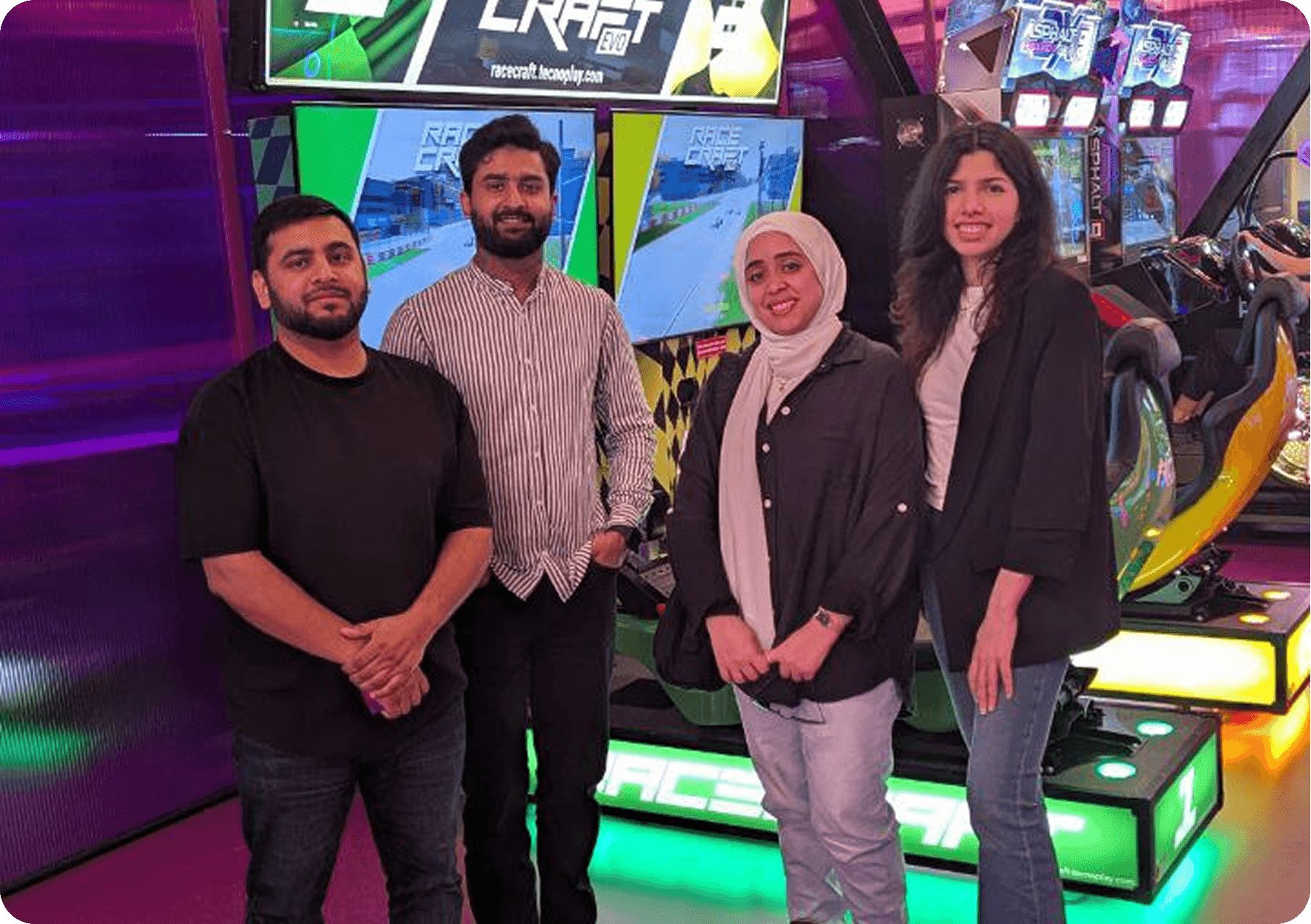
Design team at play
Upon forming the new design team, my objectives had several areas for enhancement, including elevating the skill set of designers, infusing high-quality standards into design work, and establishing trust and transparency with teams across the organisation.
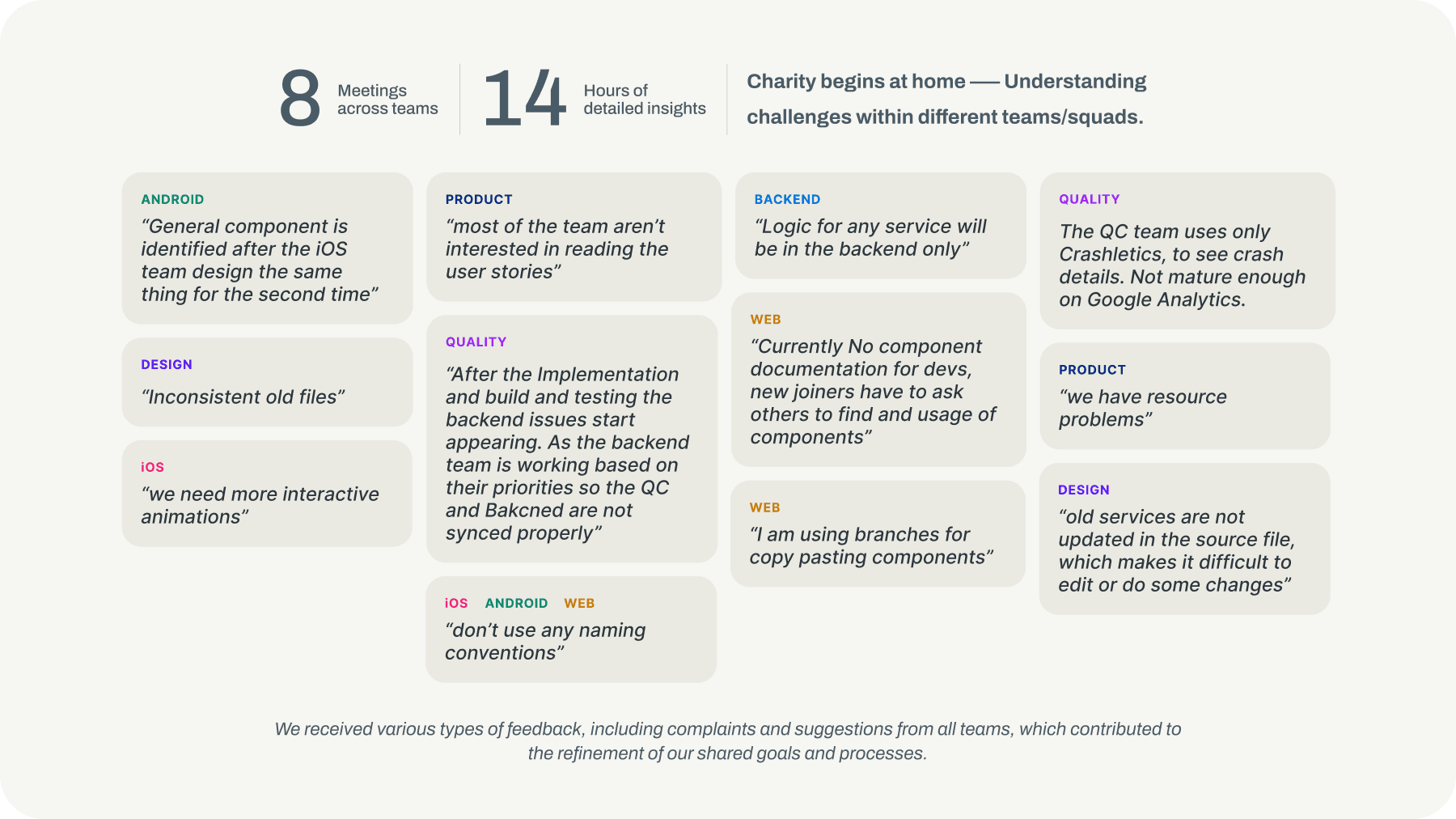
Enhancing transparency within the teams required effort and a deep understanding of the challenges faced by various teams and squads. Collaborating with my fellow designers, we initiated a series of meetings with all the different teams to identify process gaps. This encompassed delving into the day-to-day work and interactions across various departments, including mobile, frontend, backend, product, and quality teams. We conducted a total of 8 meetings, accumulating approximately 14 hours of insights from teams across the entire digital tribe. This helped the design team to take process enhancements and improvement initiative for ourselves and the rest of the team.
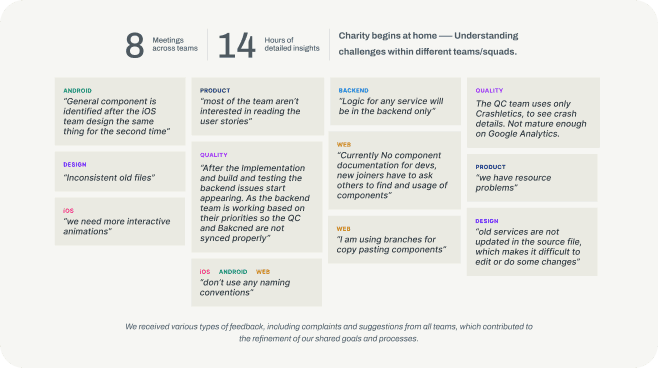
Excerpt from our internal research deck
I fine tuned the hiring process to find designers who fit our needs. I started by looking for profiles primarily on LinkedIn and reaching out to see if they were interested. The process then involved reviewing portfolios, conducting interviews, and depending on the candidate's profile, asking for a design assessment in some cases. Afterward, providing feedback, offer negotiation, final offer and onboarding.
I also crafted the job description to align with our specific needs, emphasising essential values and skills sought in each candidate. This includes effective communication skills, analytical thinking, proficiency in complex systems, and expertise in visual design, interaction design, and UX research.
The time I joined SDO, I experienced a lack of proper onboarding; it was merely a team welcome meeting. On the other hand, for remote employees, the onboarding process seemed informal, with the remote office HR simply pointing out the bathroom and kitchen. This fell short of a professional onboarding experience.
I received my MacBook three weeks after joining, and during that period, I had to use my personal MacBook for work. I had to approach the existing HR for the company org chart and tools setup, among other things. All of these issues could have been avoided with a proper onboarding process. Consequently, I took the initiative to propose a streamlined onboarding process to the senior management team, seeking approval and implementation. I believe it's crucial to spare new team members, not just in the design team but across the entire organisation, from experiencing the same hassles I encountered.
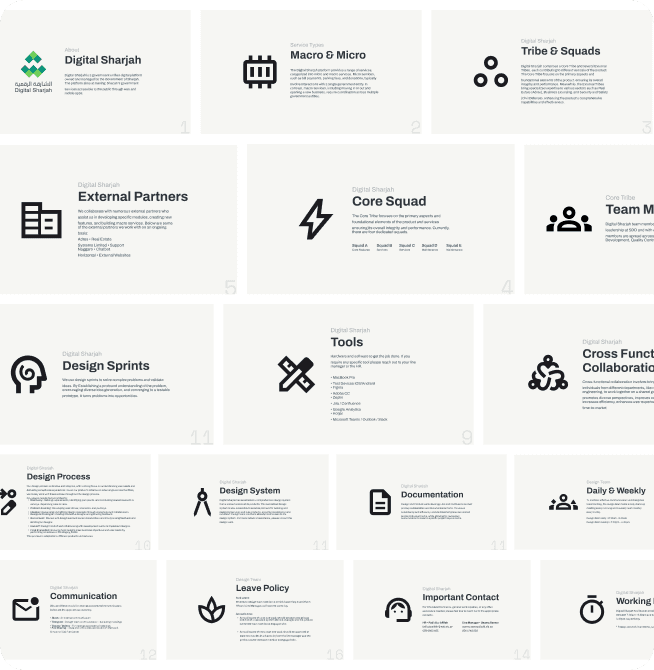
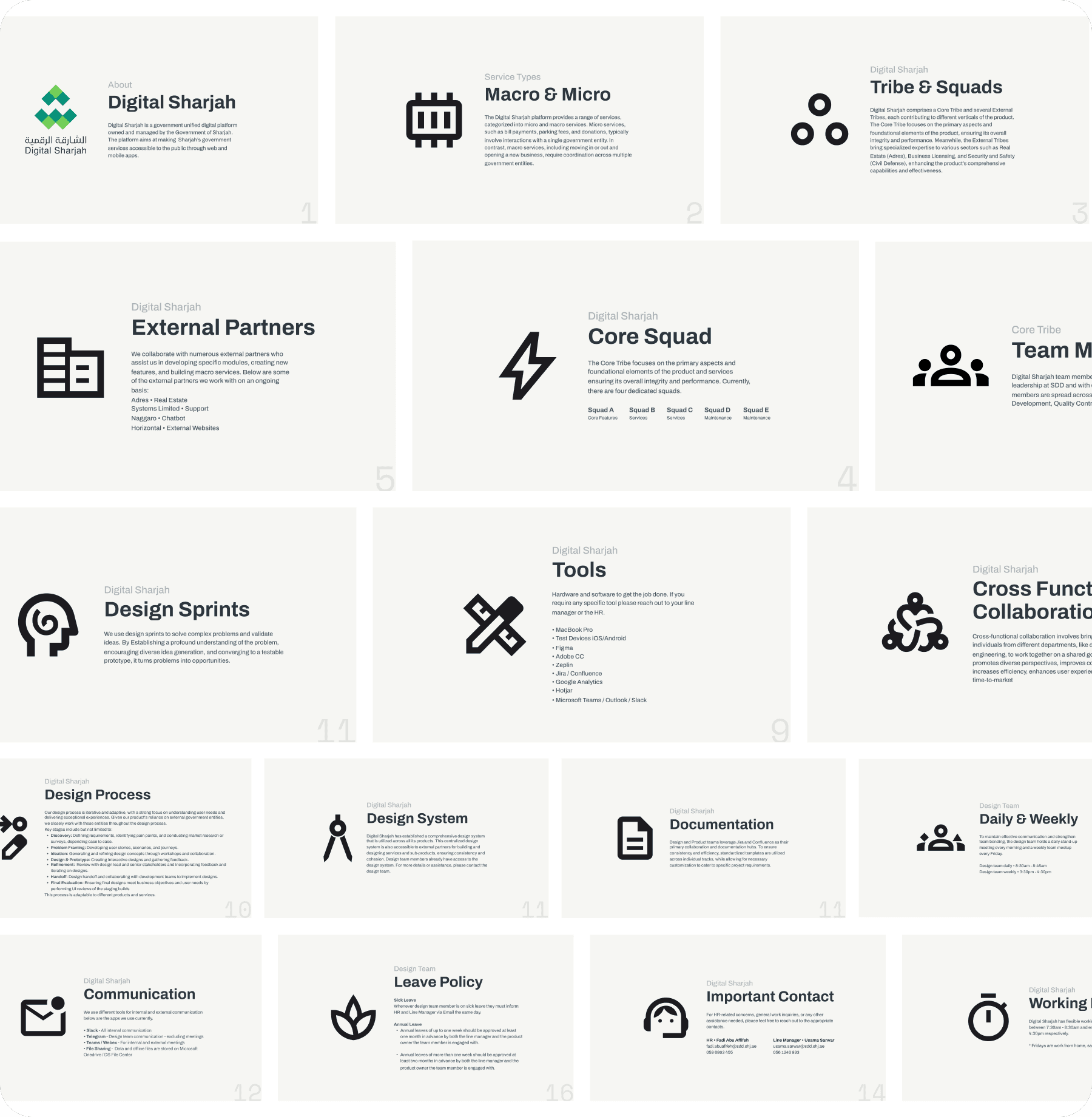
Some slides from the streamlined onboarding strategy deck
Here are a few things I made sure we integrate them in our Onboarding process:
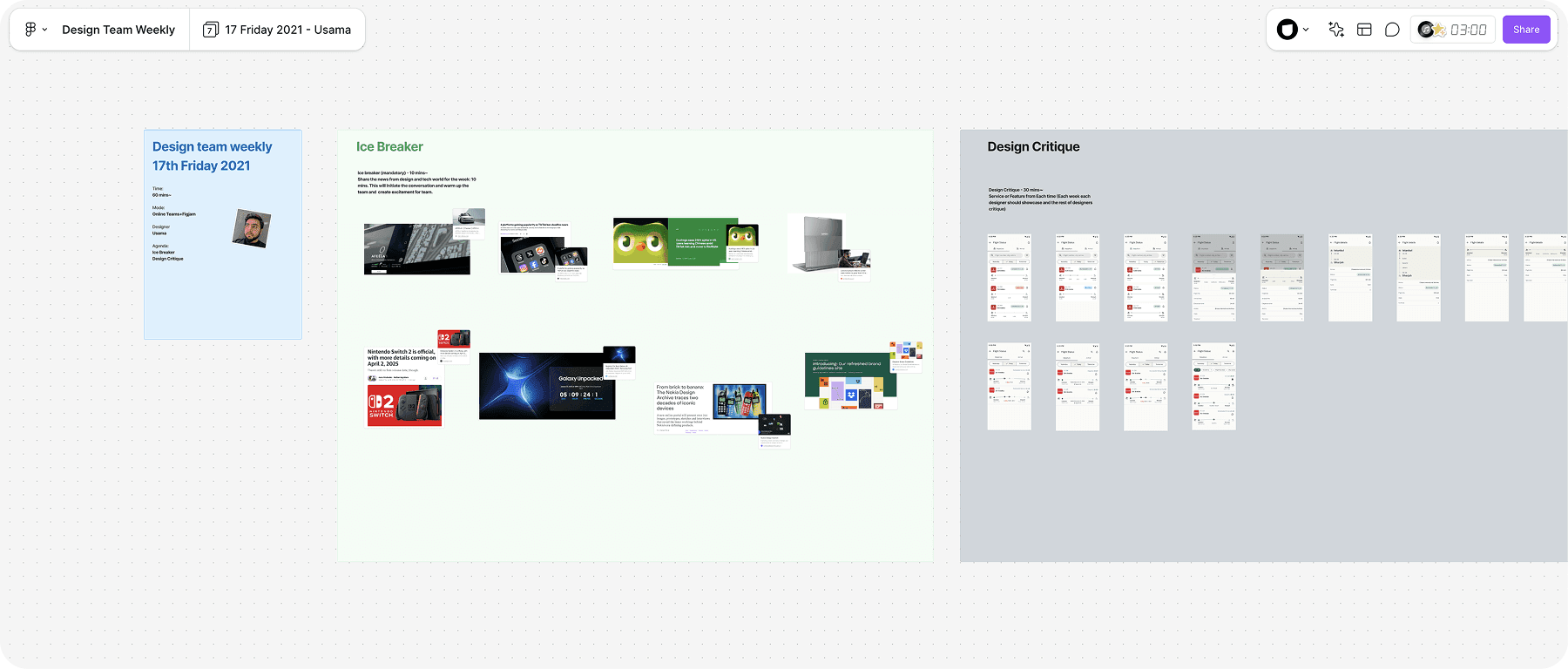
While building the design team and upon arrival of new designers, Beyond our daily stand ups, I established a weekly retro/design team gathering. This forum serves as an avenue for discussing both work and non-work-related design updates and news. During these sessions, designers showcase their weekly projects, highlighting successes and challenges they encountered, and seeking constructive feedback. Fellow designers actively engage in design critiques and design jams. Additionally, we share noteworthy design industry news to ensure everyone stays informed about the latest developments in the design market space.
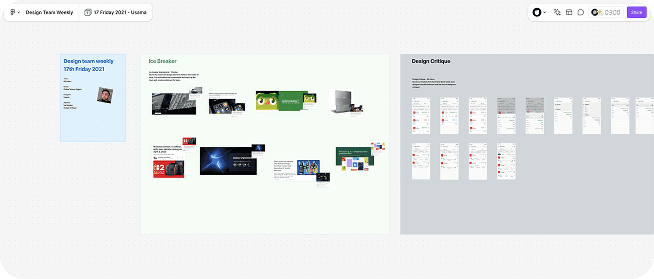
Design team weekly
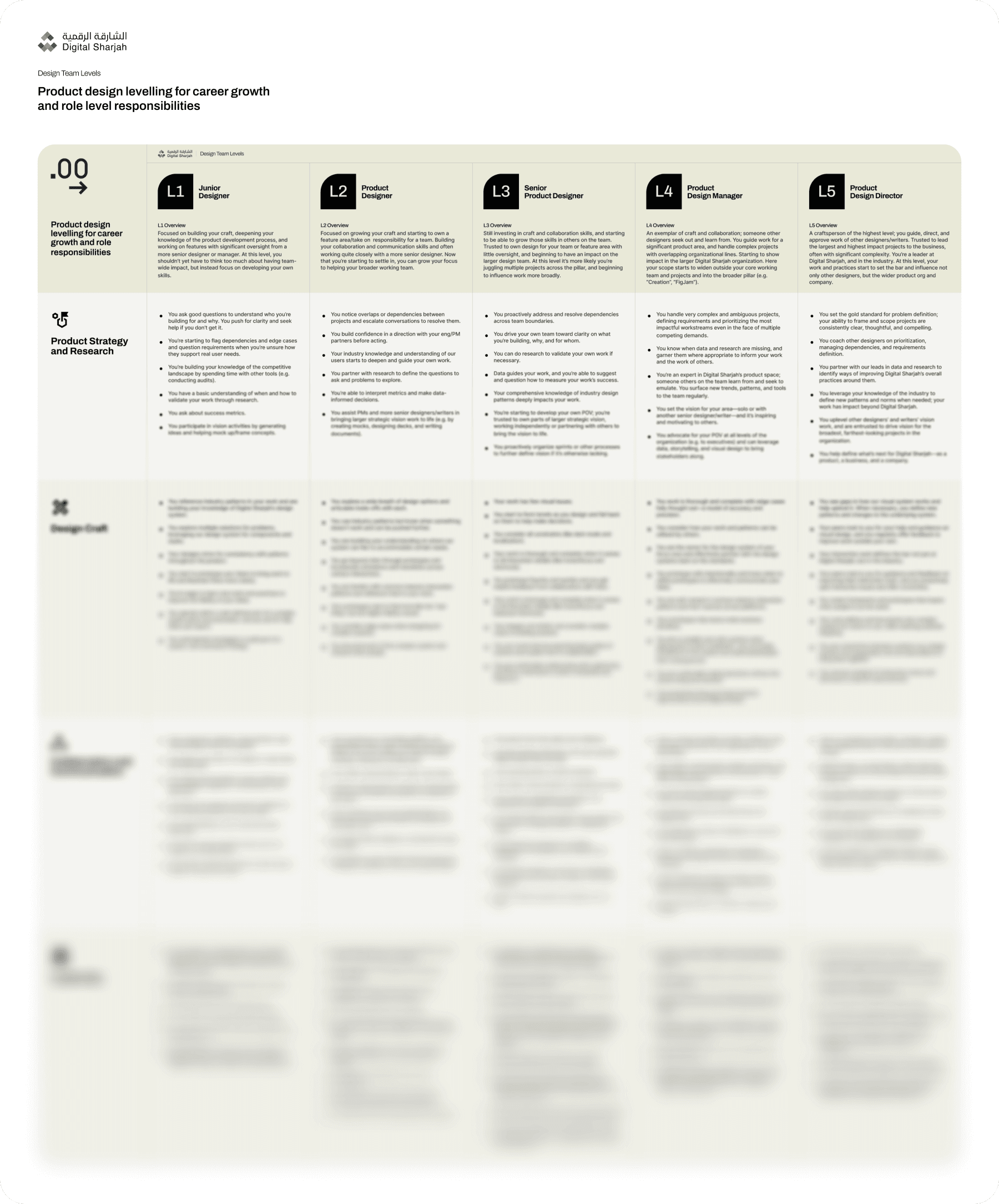
The design team at Digital Sharjah is small but growing. Beyond the standard performance reviews, I've developed customized core competencies for each design role, reflecting the specific requirements of Digital Sharjah's products and supporting individual growth. This helps designers grow both personally and professionally within the organisation. The initial five levels provide a foundation for further specialization as the team scales.
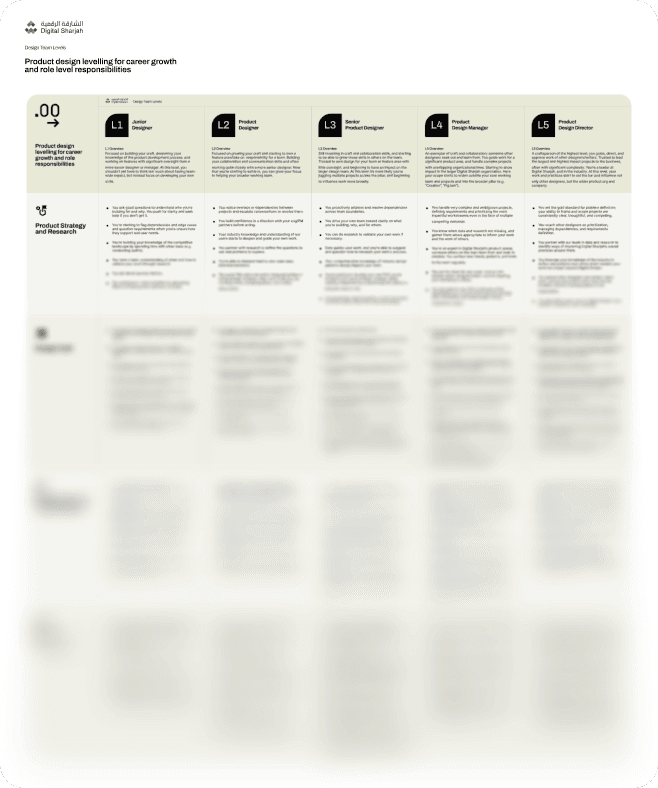
Customised levelling system with core competencies
For quality design deliveries I also make sured that we follow certain but not limited process or sort of a checklist before each release of our products across platforms.
Working with Product team
Effective collaboration with Product owners is crucial in software product development. As designers, our responsibility is to ensure that the user experience remains in sync with the product and its users. Therefore, it is imperative to ensure that Product owners have a sound rationale for the requirements and features or ideas they are proposing.
Working with Engineering team
Ensuring concurrent onboarding of engineering teams with the proposed solutions, in tandem with the design process.
Research & Design
Post and pre release activities
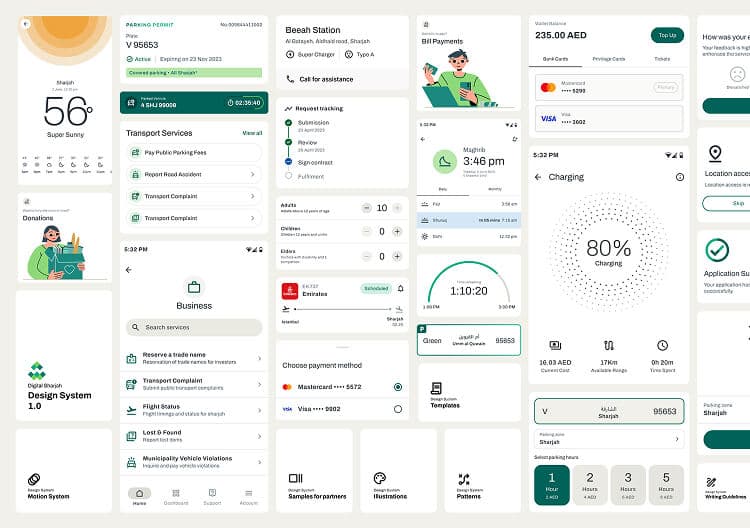
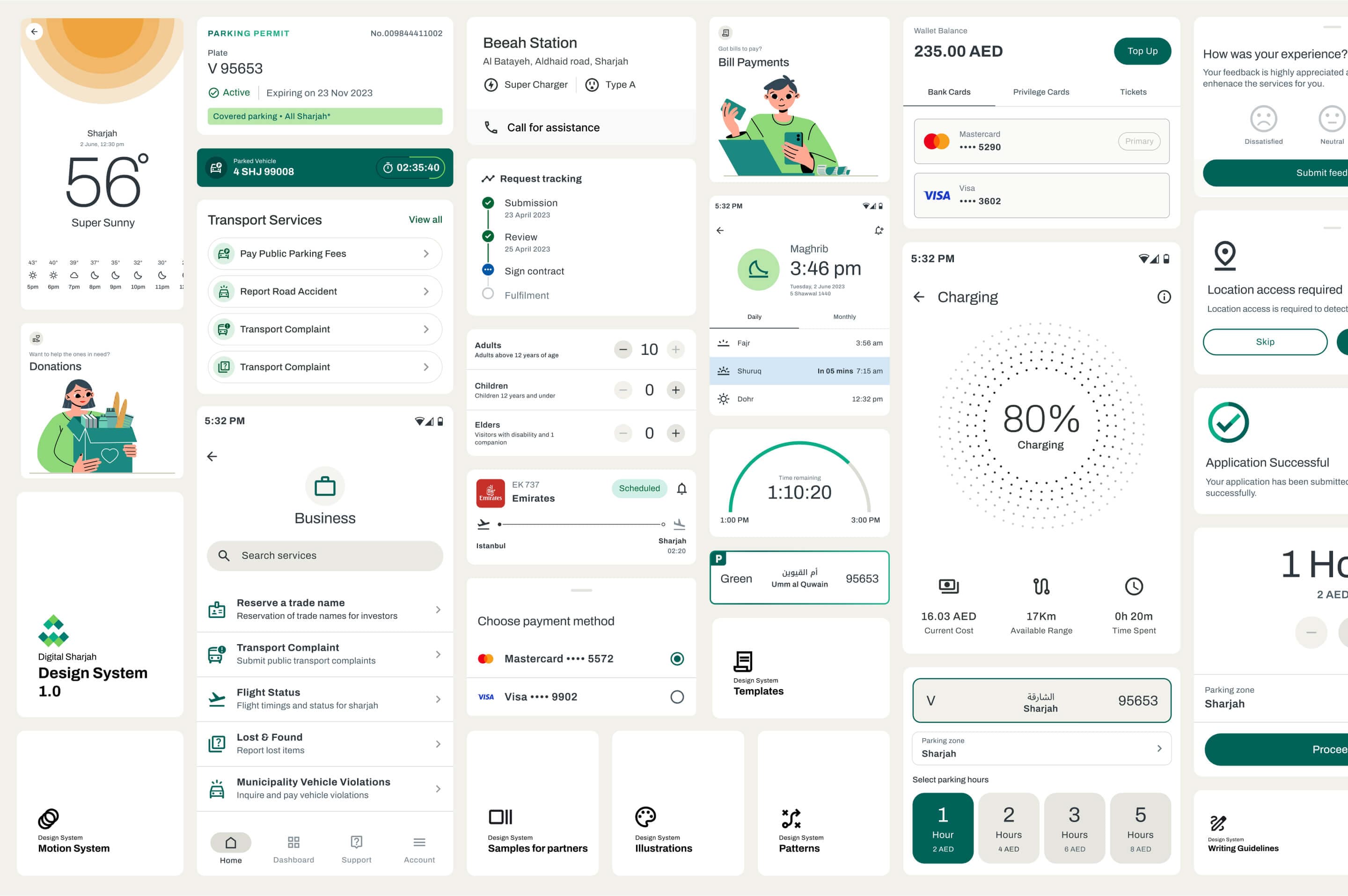
The project commenced with various teams and vendors, including freelance designers and on-site as well as remote contractors. Consequently, each contributor followed their unique processes, leading to a chaotic arrangement of design files in Adobe XD, Sketch, and Figma. The absence of a cohesive design system resulted in numerous issues in the early stages of our product, spanning from visual design and accessibility to design-to-dev implementation and beyond.
In response to the challenges posed by diverse services, ranging from micro to macro, I took the initiative to embark on building our first design system as a side projet. The goal was to not only streamline our product design but also enhance the overall product design strategy, bringing consistency in both design elements and cr o ss-team collaboratin. Additionally, I assumed the role of defining the design direction for the design system, ensuring its reflection across our flagship and other products.
Within approximately four months, we successfully developed the first version the design system and presented it to senior stakeholders in the Digital Department for approval. Over the past two years, our design system has undergone significant refinement, proving beneficial not only for internal teams but also gaining traction among external teams. The adoption and utilization of the system have led to substantial improvements.
Maintaining a sustained level of engagement and motivating every designer on my team to consistently deliver their best work has remained my central commitment. As a leader for the design team, my vision extends beyond immediate tasks—I aim to witness the growth of individuals into team leads and the realization of their fullest potential. My passion for sharing knowledge and transferring my experiences to the team is a pivotal aspect of fostering their development. By contributing to their growth, I not only enhance my role as a design leader but also enrich my own personal development.
I embrace the quote below as it aligns with my vision for my team.
"The final test of a leader is that he leaves behind him in other men the conviction and the will to carry on."— Walter Lippmann.